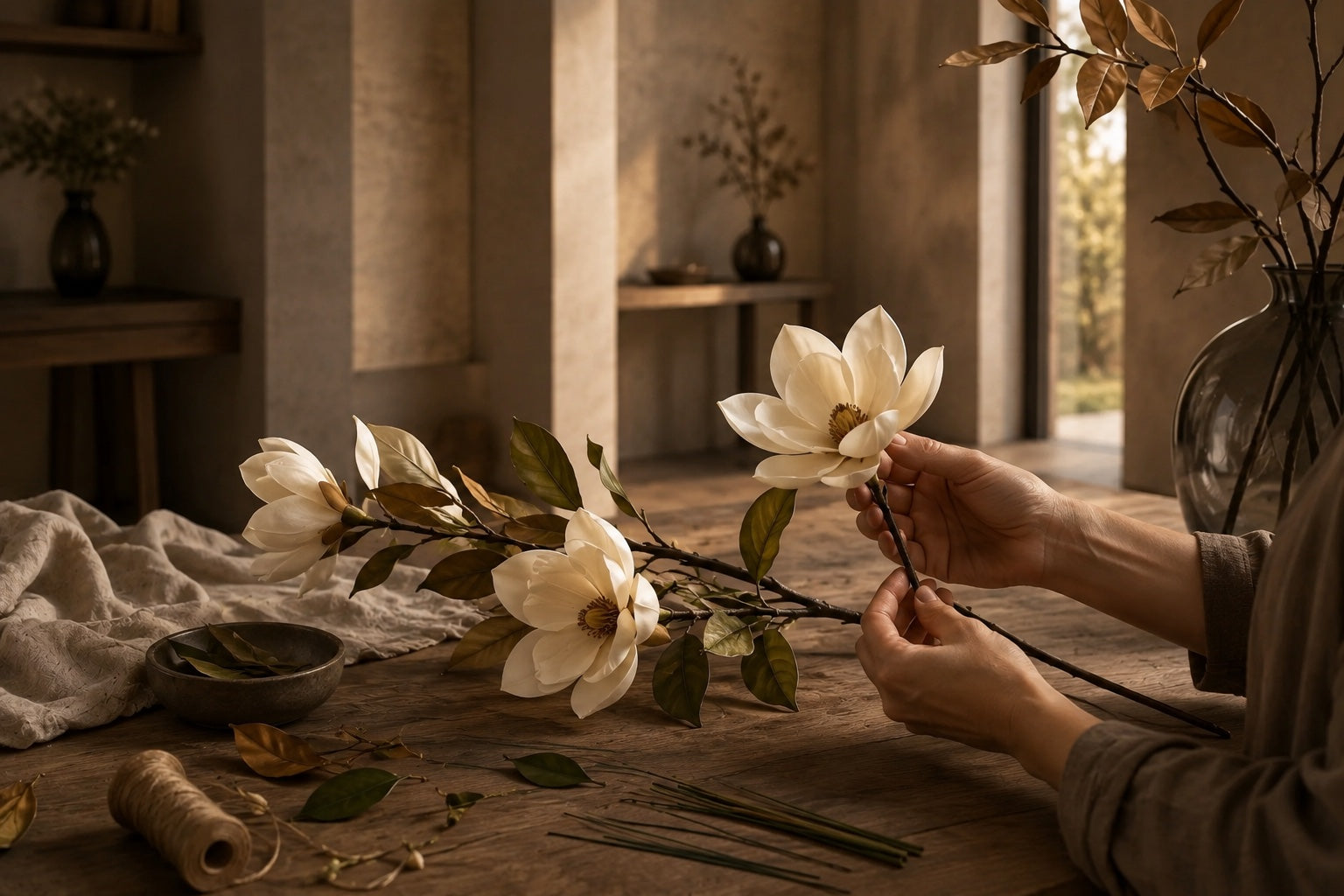
Materials & craft
Realism begins with the right material.
Petal translucency, leaf texture, flexible stems and defined branches each ask for a different material response.
One material cannot imitate every botanical detail.
Translucent petals, matte leaves, flexible stems and defined branches need different surfaces and internal structures. Material composition therefore varies by product. The product page remains the authoritative source for the piece you are considering.
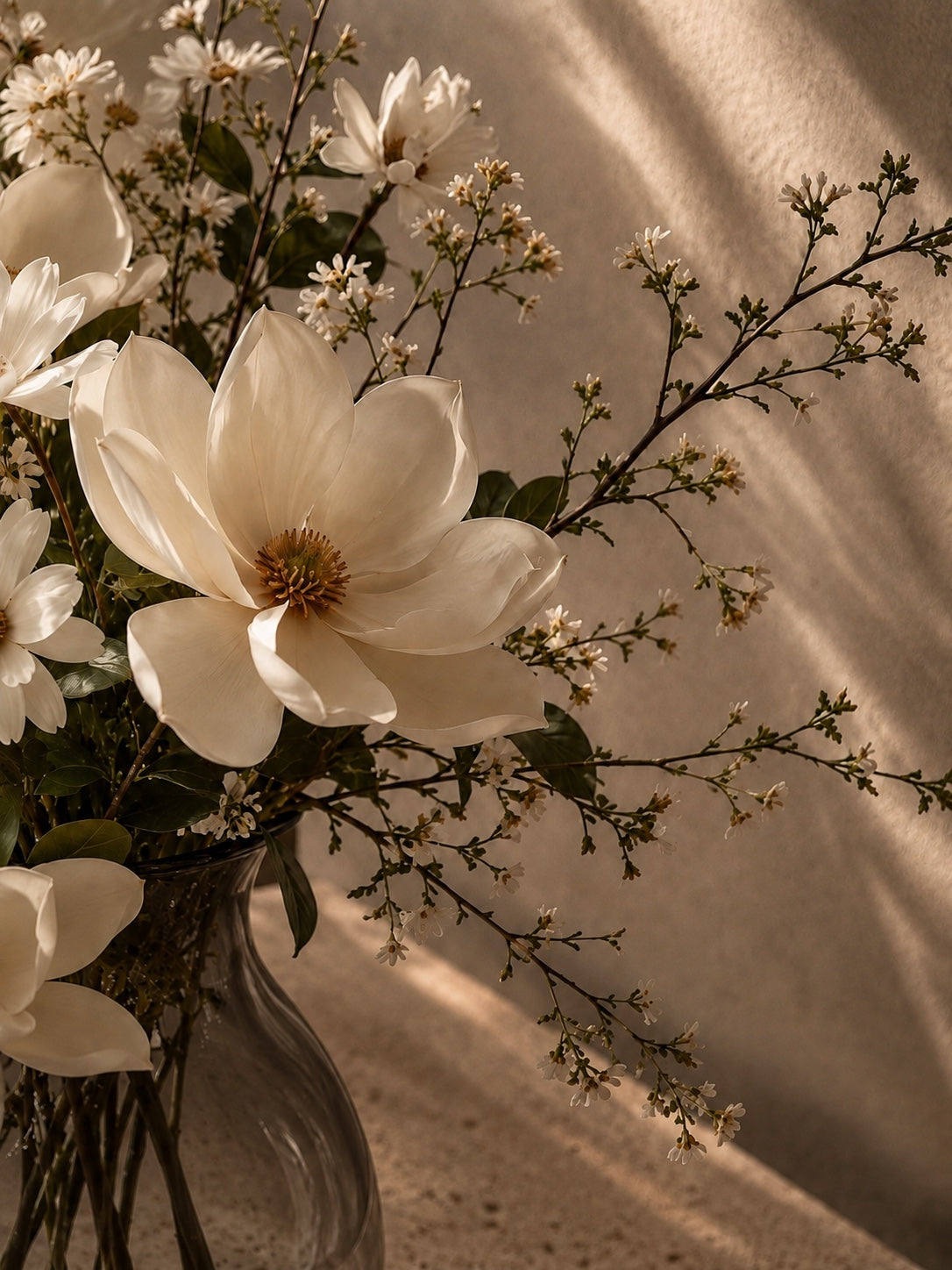
Surface and touch
Faux petals and leaves
Depending on the design, petals and foliage may use woven textiles, paper surfaces, moulded polymers or a combination. We favour finishes with visible tonal, edge and vein detail at room scale.
Real-touch finishes
These terms describe a softer, more tactile finish on selected pieces. They do not mean natural petals, and they do not make an item washable or suitable for soaking.
Structure and shaping
Internal wire
Many stems contain wire or another flexible core so leaves, branches and flowers can be opened after transit. Support the stem close to the bend and avoid forcing sharp angles.
On arrival
Stems and leaves may be gently compressed for protection. Work from the main stem outwards. Small variations between pieces are normal and help the arrangement avoid mechanical repetition.
Natural materials and vessels
Dried and preserved botanicals
Dried materials have had moisture removed. Preserved materials are treated to retain more flexibility and colour. Natural variation, light shedding and gradual fading can occur. Keep these pieces dry and away from prolonged direct sunlight.
Vases and containers
Ceramic, glass, metal, resin and stone-effect finishes can vary. Check the product page for dimensions, opening width, weight, water resistance and food-contact information. Unless the product page states otherwise, do not assume a decorative vessel is watertight or food safe.
Care follows material.
Use the gentlest, driest method first, then follow the instructions for the exact product.